1. IDEA / PRODUCT DESCRIPTION
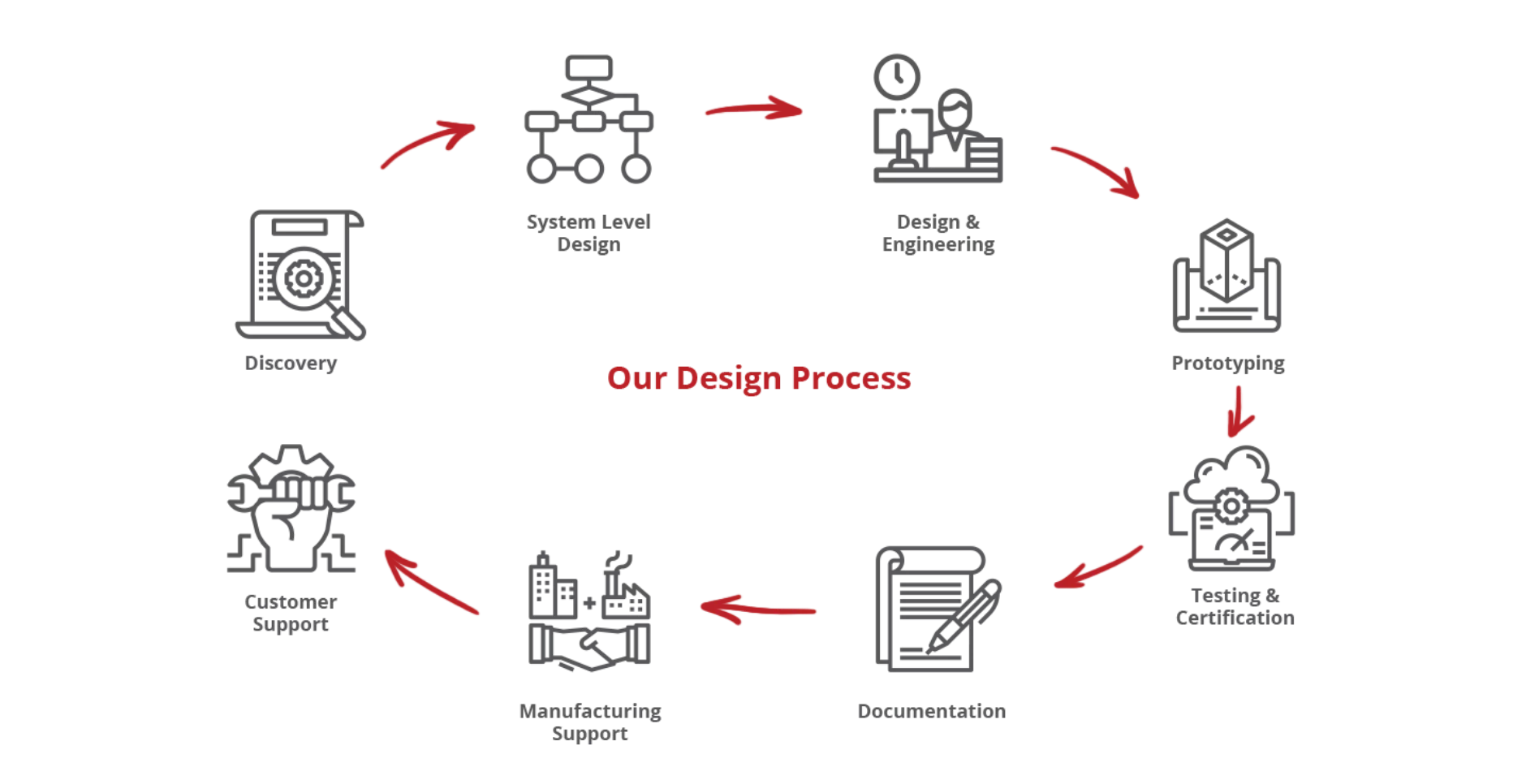
By holding multiple meetings with the project owners, we try to understand their ideas and the product they want to have. We analyze the expectations and goals of the customer and determine the scope of the project. Accordingly, we prepare a roadmap, project schedule and approximate cost study.

2. MARKET RESEARCH
We conduct a detailed research in order to get to know the desired product better and to have information about the features of its domestic/foreign counterparts, if any. Within the scope of this research, we collect samples from equivalent products or try to access their technical information. Thus, we will provide a competitive advantage to the product we will design in terms of visual, functional or economic aspects.
3. PROJECT DESCRIPTION
After bringing together the demands we received from the customer and the data we obtained as a result of market research, we determine all the technical features, design processes, necessary technical personnel and equipment needs of the product we will design. After submitting this information in writing to our customer’s approval, we start the actual design process.
4. CONCEPT DESIGN
It is the stage where the first sketches and visual designs are made in accordance with the features specified in the project definition, ideas are developed and the best methods are determined. At this stage, we prepare many visual design examples and present them to the customer’s opinion. We continue the design by taking the necessary revision notes according to the demands.
5. MAKING MOCK-UP
In order to observe the user experience, we make scale models of the product with the appropriate materials. At this stage, the product designed on paper becomes tangible for the first time and attains its 3D form. We collect the necessary data for modeling by performing visual and functional tests on the model.
6. 3D MODELING
We prepare the integrated design of the product by using solid modeling technologies on the computer. At this stage, all parts of the product (electronic & mechanical) are modeled to work together. The most suitable 3D model for mass production is prepared in accordance with CAD / CAM technologies and the final product image is created.
7. PROTOTYPE PRODUCTION
It is necessary to make a prototype of the product in order to detect possible errors and take early measures before mass production. Different and economical technologies are available for making prototypes of all electronic and mechanical parts that make up the product. Using these methods, we prepare a small number of working product samples for testing purposes.
8. INSTALLATION AND CONTROL
In order to see the assembly errors and difficulties that may be encountered during mass production, we assemble the prototype materials produced for the first time. We finalize the product design by making the necessary design revisions according to the results of the tests and controls. After functional controls and durability tests, the product is now suitable for mass production.
9. PRODUCTION FILES
We prepare production files and recipes in accordance with international standards so that the product can be produced without errors and the dependency on the manufacturer is eliminated. In these files, all projects, material lists, software codes and know-how required for the mass production of any competent company are delivered to the customer in digital and printed media.
10. MASS MANUFACTURING
If the customer requests support in production, we can produce the desired amount of electronic and mechanical equipment by using the possibilities of our company and our partners. We can provide delivery as finished product after testing and checking.